Brandon, FL Root Canals:
The term “root canal” alludes to the actual canals or stems of the tooth that are called the “pulp.” In the earliest stages of infection, a patient may not feel any pain at all. However, without professional care, the infection could progress into a toothache, swelling, or even a dental abscess. A Brandon, FL root canal removes the infection and prevents the infection from spreading further.
Most common signs that a person might need a root canal:
- Severe pain
- Prolonged sensitivity to heat or cold
- Tenderness to touch
- Difficulty chewing
- Tooth discoloration
- Swelling of the gums
- Drainage of the gums
- Tenderness in the lymph nodes
- Gum and/or tooth disease

Simple Steps to Root Canal in Brandon, FL
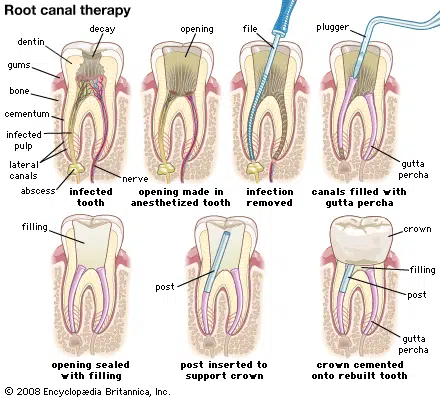
- First, the dentist will take an x-ray to determine the shape of the root canals and to inspect for any signs of infection to the surrounding bone.
- Next, your dentist will use anesthesia to numb the area surrounding the tooth.
- In order to keep the area dry, the dentist will then place a rubber dam around the tooth to keep it free of any saliva.
- The dentist will then use a drill in order to access the center of the tooth.
- Root canal files and water or a similar solution are then used to remove the pulp, bacteria, decayed nerve tissue, and any other related debris from inside of the tooth.
- Finally, once the tooth is thoroughly cleaned it is sealed.
What to Expect After a Root Canal
For the first few days after the root canal the tooth may feel sensitive, especially if there was pain before the procedure. Any such sensitivity or discomfort is typically controlled with over-the-counter pain medications. Most patients return to their normal activities the day after the operation and will gain full, pain-free use of their tooth moving forward!
Root Canal FAQs
Nervous about getting a root canal? Here are answers to the most common questions our Brandon, FL patients ask about root canal treatment.
Modern root canals are no more uncomfortable than getting a filling. We use local anesthesia to completely numb the area, so you'll feel pressure but not pain. Most patients are surprised by how comfortable the procedure actually is.
A root canal typically takes 60 to 90 minutes, depending on the tooth's location and complexity. Front teeth with one root are quicker, while molars with multiple roots may take longer. Most root canals are completed in a single visit.
Root canal costs vary based on which tooth needs treatment—molars cost more than front teeth due to their complexity. We offer payment plans and can help you understand your insurance coverage before treatment begins.
Saving your natural tooth with a root canal is almost always the better option. Extracting a tooth requires replacement with an implant or bridge to prevent shifting teeth and bone loss, which costs more in the long run. A root canal preserves your natural smile and bite.
Without treatment, the infection will spread, potentially causing a painful abscess, bone loss, and tooth loss. In severe cases, the infection can spread to other areas of your body. Early treatment prevents these complications.
Yes, most patients can drive themselves home after a root canal since only local anesthesia is used. If you opt for sedation dentistry due to anxiety, you'll need someone to drive you home.
Wait until the numbness wears off before eating to avoid biting your cheek or tongue. Stick to soft foods for the first day or two and avoid chewing on the treated side until your permanent crown is placed.
In most cases, yes. A crown protects and strengthens the treated tooth, which becomes more brittle after the procedure. We offer same-day crowns so you can complete your treatment without a second appointment.
A properly treated and restored tooth can last a lifetime with good oral hygiene and regular dental checkups. Success rates for root canal treatment exceed 95%.
While uncommon, root canals can occasionally fail if bacteria remain in the tooth or new decay develops. Signs of failure include persistent pain, swelling, or a recurring abscess. Retreatment or other procedures can address these issues if they occur.